Nobody Explained This About English Fluency Until I Discovered It Myself
For years, I believed that memorizing grammar rules and learning difficult vocabulary would automatically make me fluent in English.
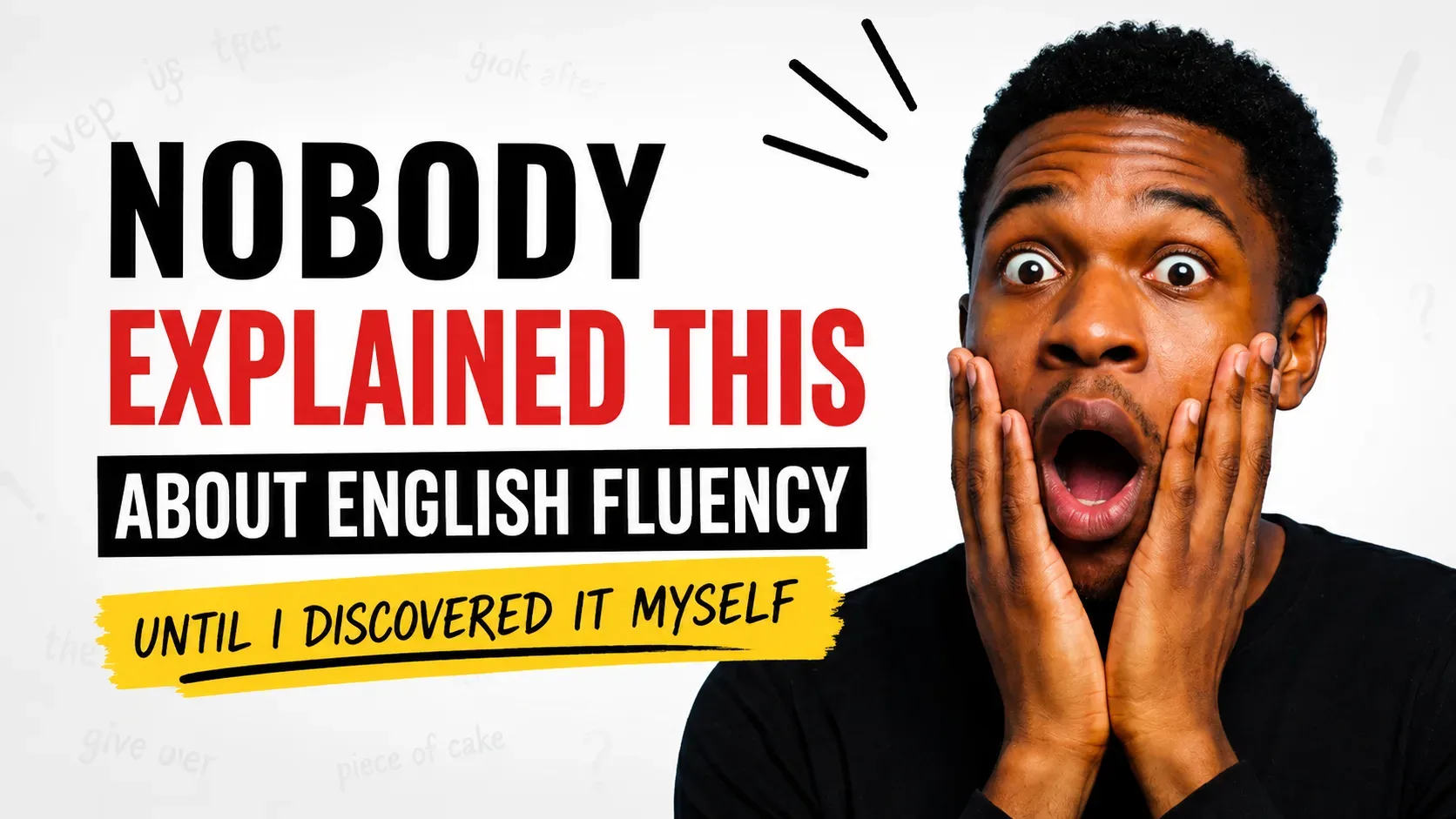
Why Idioms and Phrasal Verbs May Be the Missing Key to Natural English Communication ?
For years, I believed that memorizing grammar rules and learning difficult vocabulary would automatically make me fluent in English. Like many learners, I spent hours studying textbooks, repeating definitions, and trying to understand complex grammar structures.
But despite all that effort, something still felt missing.
Whenever I listened to native English speakers in movies, interviews, podcasts, or business conversations, their English sounded completely different from what I had learned in school.
They spoke faster, more naturally, and more confidently.
That is when I discovered something nobody had clearly explained before:
Fluent English is not only about grammar and vocabulary. It is also about understanding idioms, phrasal verbs, and everyday expressions.
And honestly, this discovery completely changed the way I learn English today.
The Hidden Problem Many English Learners Face
Research in language learning shows that many students can understand grammar rules but still struggle to communicate naturally in real conversations.
Why?
Because real English communication is filled with expressions that are rarely taught deeply in traditional classrooms.
Native speakers constantly use:
- Phrasal verbs
- Idioms
- Informal expressions
- Connected speech
- Everyday communication patterns
Without understanding these expressions, learners often feel lost during conversations, movies, or professional discussions.
What Are Phrasal Verbs?
Phrasal verbs are combinations of:
- a verb
- plus another word such as:
- up
- over
- out
- off
- in
Together, they create a completely different meaning.
Examples
| Phrasal Verb | Meaning |
|---|---|
| Give up | Stop trying |
| Find out | Discover |
| Look after | Take care of |
| Turn on | Activate |
| Take over | Gain control |
Example Sentences
- Never give up on your goals.
- I found out the answer yesterday.
- She looks after her younger brother.
- Please turn on the computer.
- The new director will take over next month.
Research in second-language acquisition suggests that learners who practice phrasal verbs regularly improve conversational fluency faster because these expressions appear constantly in spoken English.
Why Native Speakers Use Phrasal Verbs So Much
One thing I discovered is that native speakers often prefer phrasal verbs instead of formal vocabulary.
For example:
| Formal English | Natural English |
|---|---|
| Continue | Carry on |
| Discover | Find out |
| Enter | Come in |
| Remove | Take off |
| Postpone | Put off |
Both are correct.
But native speakers usually choose the more natural expression during conversations.
This is one of the reasons why learners sometimes understand textbook English but struggle with real spoken English.
Idioms: The Real Language of Daily Communication
Idioms are expressions whose meanings are different from the literal meaning of the words.
For example:
“Break the ice”
Literal meaning: Destroy ice.
Real meaning: Start a conversation comfortably.
“Over the moon”
Literal meaning: Above the moon.
Real meaning: Extremely happy.
Example: She was over the moon after passing her exams.
“Piece of cake”
Literal meaning: A dessert.
Real meaning: Something very easy.
Example: The test was a piece of cake.
Why Idioms Matter in English Fluency
Studies in communication and language acquisition show that idioms help learners:
- understand native speakers better,
- improve listening comprehension,
- sound more natural,
- communicate more confidently,
- and connect culturally with the language.
Without idioms, English can sound too direct, robotic, or overly formal.
Idioms bring personality and natural flow into communication.
The Biggest Mistake I Made
For a long time, I focused almost entirely on:
- grammar rules,
- difficult vocabulary,
- and translation.
But I was not exposing myself enough to real English communication.
I realized that fluency grows faster when learners:
- listen actively,
- practice expressions daily,
- read authentic English content,
- and study how native speakers actually communicate.
That changed everything for me.
What Research Says About Language Learning
Modern language-learning research emphasizes the importance of:
- contextual learning,
- repeated exposure,
- active communication,
- and practical usage.
This means learners improve faster when they learn English through:
- conversations,
- videos,
- storytelling,
- practical examples,
- and repeated real-life expressions.
Not just memorization.
This explains why students who regularly consume English content often improve their fluency naturally over time.
How to Learn Idioms and Phrasal Verbs Faster
1. Learn Them in Context
Do not memorize long isolated lists.
Instead, learn expressions inside sentences.
Example:
Instead of: “Give up = stop”
Learn: “Never give up on your dreams.”
2. Watch English Content Daily
Movies, podcasts, interviews, and YouTube videos expose you to natural English communication.
You begin hearing expressions repeatedly.
This improves understanding naturally.
3. Practice Speaking Without Fear
Fluency develops through usage.
Even if you make mistakes, continue practicing.
Confidence is part of language learning.
4. Keep a Personal Expression Notebook
Write down:
- new idioms,
- phrasal verbs,
- and useful expressions.
Review them regularly.
5. Read Modern English Articles
Reading improves:
- vocabulary,
- sentence structure,
- comprehension,
- and expression recognition.
Why Practical English Matters Today
In today’s world, English is essential in:
- Technology
- Artificial Intelligence
- Business
- Education
- Digital Marketing
- International Communication
Companies today value people who can communicate clearly and confidently in professional environments.
Practical English is no longer optional.
It is becoming a global professional skill.
Learning English the Smart Way
One of the biggest lessons I learned is this:
Fluency does not come from trying to sound perfect.
It comes from understanding how English is naturally used every day.
That means learning:
- expressions,
- communication patterns,
- natural speech,
- idioms,
- and phrasal verbs.
The more exposure you get, the more natural English becomes.
Nobody explained this to me when I first started learning English.
I thought fluency only depended on grammar and vocabulary.
But real English communication is much deeper than that.
Idioms and phrasal verbs are everywhere in spoken English, professional discussions, movies, online content, and international communication.
Once you begin understanding them, English starts feeling more natural, more flexible, and much easier to understand.
Keep practicing consistently.
Stay curious.
And remember:
Every new expression you learn brings you one step closer to fluency.
Ready to Improve Your English and Digital Skills?
Discover modern and practical training programs at The Brotherly Training Center (BTC) in:
- English
- Computer Science
- Spanish
- Digital Skills
- Professional Communication
- Driving with Modern Technology
The Brotherly Training Center
Teaching is Touching Souls Forever.
Website: https://www.btcagapd.com
Partager l’article
Nobody Explained This About English Fluency Until I Discovered It Myself
For years, I believed that memorizing grammar rules and learning difficult vocabulary would automatically make me fluent in English. Like many learners, I spent...